January signals a fresh start—the perfect time to tackle all those postponed tasks.
From scheduling medical appointments like doctor and dentist visits to finally addressing that unusual sound coming from your car, it's all about proactive care.
While preventive maintenance may seem mundane, it beats scrambling through avoidable crises.
So, let's confront a critical inquiry:
When was the last time your business technology underwent a comprehensive health check?
Not just quick fixes like "we repaired the printer last week," but a thorough evaluation of its overall wellness.
There's a vital difference between "operational" and truly "healthy."
Avoid Falling into the "I Feel Fine" Illusion
Many skip health exams simply because they feel no pain.
Businesses often do the same with technology, telling themselves:
"Systems are functioning."
"We're swamped right now."
"We'll address issues when they arise."
But tech issues rarely announce themselves upfront.
Just like dangerously high blood pressure can go unnoticed or a hidden cavity silently worsening, technology risks often lie beneath the surface until they erupt into crises.
Typical culprits behind small business tech failures include:
- Known vulnerabilities left unattended
- Outdated hardware that seemed reliable until failure struck
- Backups that exist but fail to restore data
- Unmanaged access permissions piling up over time
- Compliance oversights overlooked during operations
Your systems might operate day to day but still be seconds from a catastrophic failure.
What a True Technology Checkup Entails
A professional tech assessment scrutinizes your business like a doctor evaluates your health—carefully searching for hidden issues before they become emergencies.
Essential Check: Backup and Recovery Reliability
This area reflects your technology's vitality. When disaster strikes, can you bounce back swiftly?
Consider these critical questions:
• Are backups completing successfully—not just scheduled?
• When did you last conduct a restore test by retrieving actual files?
• If your server failed tomorrow morning, how soon could you resume operations? Do you have a clear answer?
Many only realize their backups are faulty during a crisis—akin to finding out airbags failed during a crash.
Core Health: Hardware and Infrastructure Assessment
Hardware wears down invisibly: support ends, performance declines, then unexpected failure happens at the worst time.
- How current is your primary equipment—servers, firewalls, workstations?
- Is any device out of manufacturer support with no security patches or fixes?
- Are replacements planned strategically or only done after catastrophic breakdowns?
Neglecting hardware aging is a leading source of downtime—systems drag then abruptly stop.
Access Control Audit: Who Has System Permissions?
If your answer to who can access vital systems is uncertain, it's time to act.
- Can you provide a detailed list of all system access holders?
- Are there former staff or vendors still active in your systems?
- Do shared accounts prevent tracking user actions?
Unchecked access accumulates unnoticed, exposing your business to serious risks—not out of negligence, but from lack of time to clean up.
Disaster Preparedness: The Critical Screening
Nobody enjoys contemplating worst-case events, but preparedness is crucial.
- Is there a concrete, written plan if ransomware or other cyberattacks occur tomorrow?
- Has the disaster recovery plan been tested?
- How long could your operations continue without key systems functioning?
Without a tested plan, your fallback is mere hope—not preparedness.
Industry Compliance: Tailored Expertise Matters
Your industry's regulations define what "healthy" means, enforced through audits and penalties.
- In healthcare, HIPAA compliance is mandatory, with fines reaching $50,000 per violation.
- Handling payments means adhering to PCI standards, where failure can halt your ability to process credit cards.
- Increasingly strict client contracts demand rigorous security measures.
Generic IT advice won't suffice—you need seasoned professionals familiar with your sector's unique demands.
Signs It's Past Time for a Technology Exam
If you relate to statements like these, don't delay your tech checkup:
"I believe our backups are reliable." (Belief isn't proof.)
"Our server is old but still functions." (Until it fails unexpectedly.)
"Former employees probably still have access." (Probably isn't secure.)
"We have a disaster plan somewhere." (If not found instantly, it's as good as nonexistent.)
"If one key person leaves, it would hurt us." (Single points of failure are dangerous.)
"We're overdue for an audit but haven't been contacted." (The call might be coming.)
The High Price of Neglecting Maintenance
Technological checkups take only hours, whereas failures drain days, weeks, or even threaten your entire business.
The stakes include:
Data loss: Faulty backups can erase critical client records, financial data, and project files permanently—some companies never recover.
Downtime costs: Every minute offline means lost revenue, stalled productivity, missed deadlines, and damaged client trust.
Compliance penalties: HIPAA violations may cost up to $50,000 each, PCI breaches risk payment processing capabilities, and privacy regulations grow stricter yearly.
Ransomware expenses: Recovery costs for small businesses now often reach six figures, encompassing ransoms, remediation, lost income, and reputational harm.
Investing in prevention is affordable and straightforward; dealing with recovery is costly and embarrassing.
Why Expert Evaluations Are Essential
You wouldn't self-diagnose medical problems—you rely on qualified professionals with expertise, tools, and experience to interpret what's normal and what's not.
The same applies to technology:
- Professionals understand what "healthy" means for businesses of your size and industry, beyond generic advice.
- They recognize common failure patterns and early warning signs that non-experts might overlook.
- They spot issues normalized by everyday exposure that your own team may no longer notice.
This approach prioritizes prevention over costly firefighting.
Reserve Your Technology Wellness Check Today
With January being a prime time for scheduling preventive care, include your business technology in that plan.
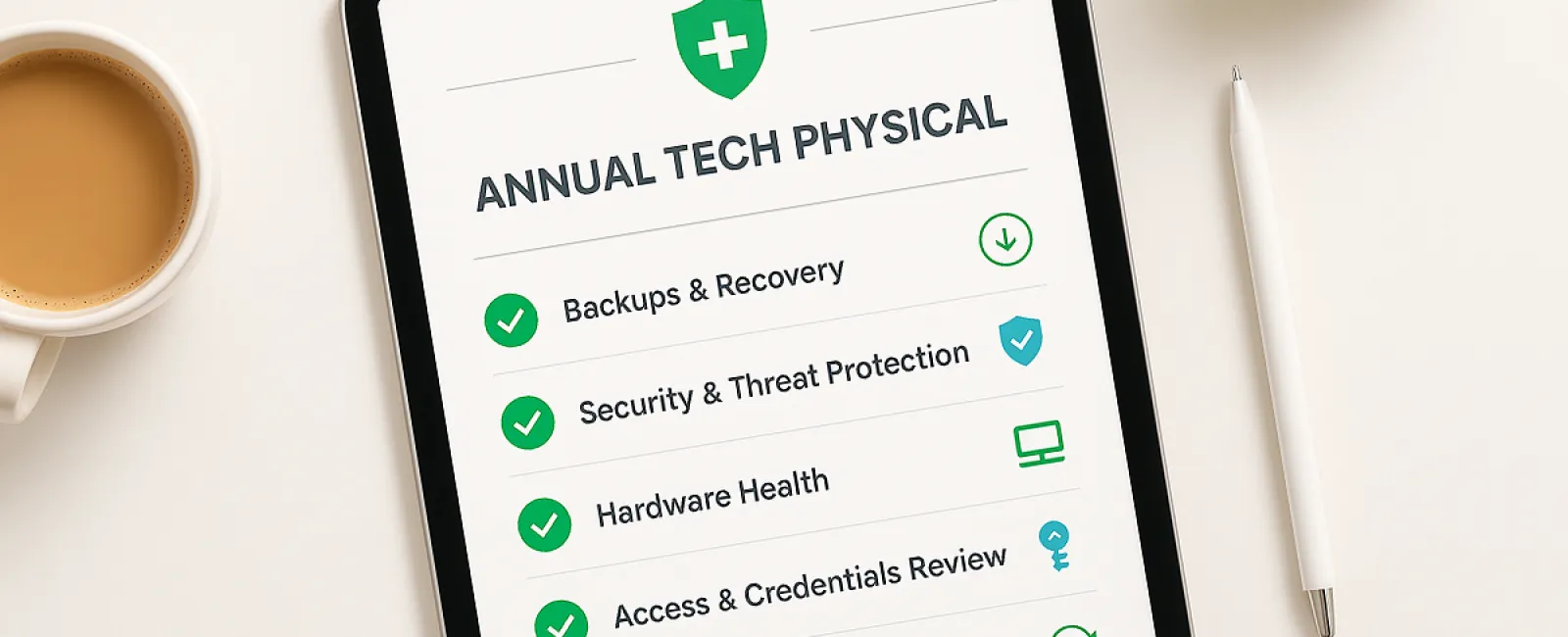
Book your Annual Tech Physical now.
We will perform a detailed evaluation of your environment and deliver a straightforward, jargon-free health report outlining what's secure, what's vulnerable, and what requires attention before issues escalate.
No pressure—just clear insights crafted for your peace of mind.
Click here or give us a call at 973-439-0306 to book your 15-Minute Discovery Call.
The best time to address technology risks is before they turn into emergencies. That moment is now.