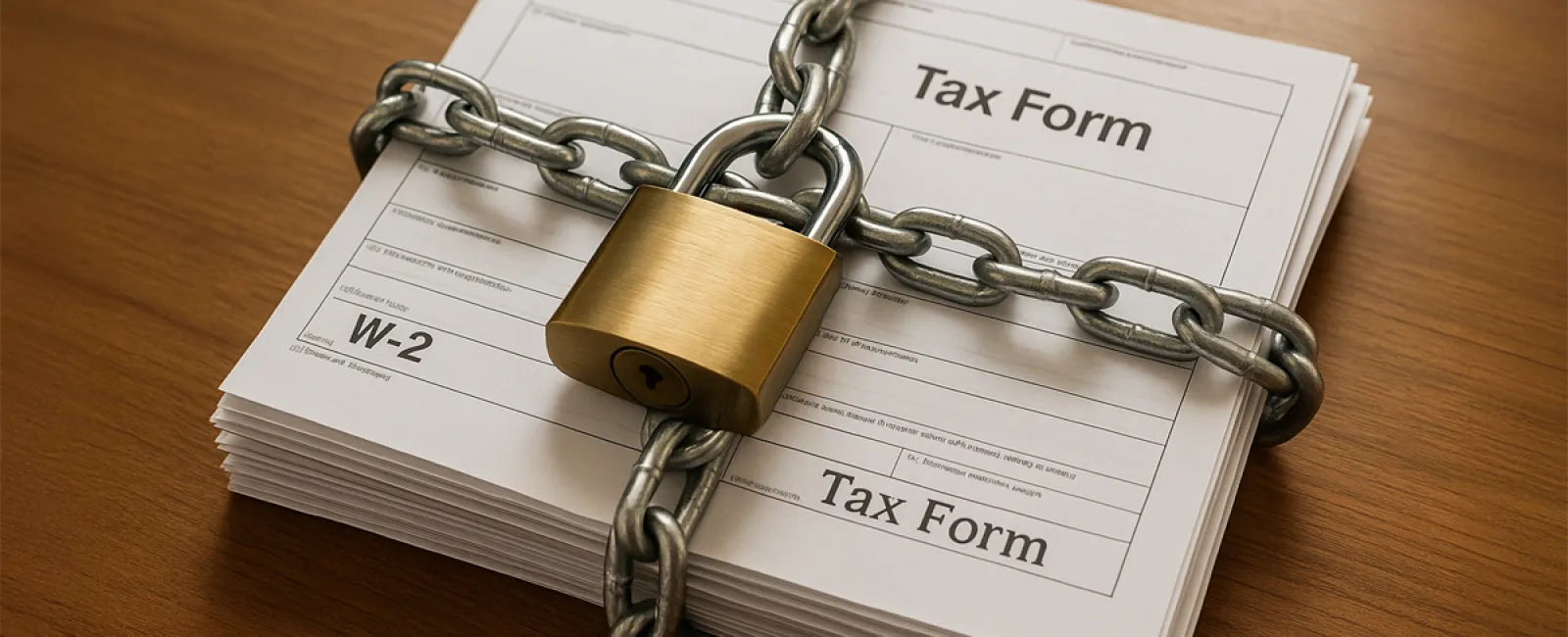
February marks the peak of tax season—your accountant's schedule is filling up, your bookkeeper is gathering financial documents, and everyone is focused on W-2s, 1099s, and looming deadlines.
But the most frustrating tax-season challenge often isn't paperwork—it's a sophisticated scam.
This scam arrives early, well before April, targeting small businesses with a convincing and simple ploy. It might already be sitting in someone's inbox unnoticed.
Understanding the W-2 Scam: What Happens
Here's the typical scenario:
An employee responsible for payroll or HR receives an email that appears to come from the CEO, owner, or a top executive.
The email is brief and urgent:
"I need copies of all employee W-2s for a meeting with the accountant. Please send them ASAP—I'm swamped today."
The tone sounds authentic. Given the busy tax season, the urgency feels genuine and the request plausible.
Without hesitation, your employee forwards the W-2s.
But the email was never from the CEO—it originated from a cybercriminal using a spoofed address or a deceptive domain.
Now, the scammer has access to every employee's:
• Full legal name
• Social Security number
• Home address
• Salary details
Everything needed to commit identity theft and file fraudulent tax returns ahead of your employees.
Consequences of Falling Victim
Typically, victims discover the breach when:
An employee attempts to file their tax return, only to have it rejected with the message: "Return already filed for this Social Security number."
Someone else has already filed using their identity and claimed their refund.
This leads to a harrowing process involving the IRS, credit monitoring, identity protection services, and extensive paperwork—all resulting from a document they never intended to share.
Multiply this risk across your entire payroll, and consider the impact on employee trust, HR challenges, legal liability, and your company's reputation.
Why This Scam Is So Effective
This isn't a clumsy phishing attempt—it's highly sophisticated and believable.
Key reasons for its success include:
• Perfect timing during tax season makes requests for W-2s seem routine.
• The request is reasonable and aligns with standard business practices.
• The urgency sounds normal and doesn't raise suspicions.
• Spoofed emails mimic real executives and may reference actual names for credibility.
• Employees naturally want to assist leadership, causing them to override caution.
Proactive Measures to Safeguard Your Business
The good news? This scam is preventable through clear policies and a vigilant culture—not just technology.
Implement a strict "no W-2s sent via email" policy. No exceptions. Protect sensitive payroll documents by never emailing them outside your organization.
Always verify sensitive requests through a secondary channel—call, in-person, or a trusted chat platform—using previously saved contact details. A 30-second check can prevent months of crisis.
Host a brief tax scam awareness session immediately. Train payroll and HR teams to recognize phishing attempts and respond appropriately to suspicious requests.
Secure payroll and HR platforms with multi-factor authentication (MFA) to protect employee data from credential theft.
Encourage a verification culture where double-checking unusual requests is seen as smart—not paranoid. Reward employees who take extra care, making it harder for scams to succeed.
These five simple rules are quick to implement and powerful enough to block the initial wave of attacks.
Seeing the Broader Threat Landscape
The W-2 scam is just the beginning.
Expect a surge of tax-themed frauds before April, including:
• Bogus IRS notices demanding immediate payments
• Phishing emails pretending to be tax software updates
• Spoofed messages from "accountants" containing harmful links
• Fake invoices designed to look like legitimate tax expenses
Criminals thrive during tax season—when businesses are distracted and financial requests are routine.
Companies that navigate tax season safely do so because they're prepared with policies, training, and systems to catch red flags early.
Is Your Business Prepared?
If your team already understands these risks and policies are in place, you're ahead of many small businesses.
If not, now is the moment to act—don't wait for a scam to strike.
To help, schedule a 15-minute Tax Season Security Check where we'll assess:
• Payroll and HR access controls including MFA
• Verification procedures for W-2 requests
• Email security measures that detect spoofing
• A critical policy adjustment often overlooked by businesses
If your business is already protected, that's fantastic. But if you know a business owner who isn't, sharing this article could save them from costly trouble.
Click here or give us a call at 973-439-0306 to schedule your free 15-Minute Discovery Call.
Because tax season is stressful enough without adding the threat of identity theft.